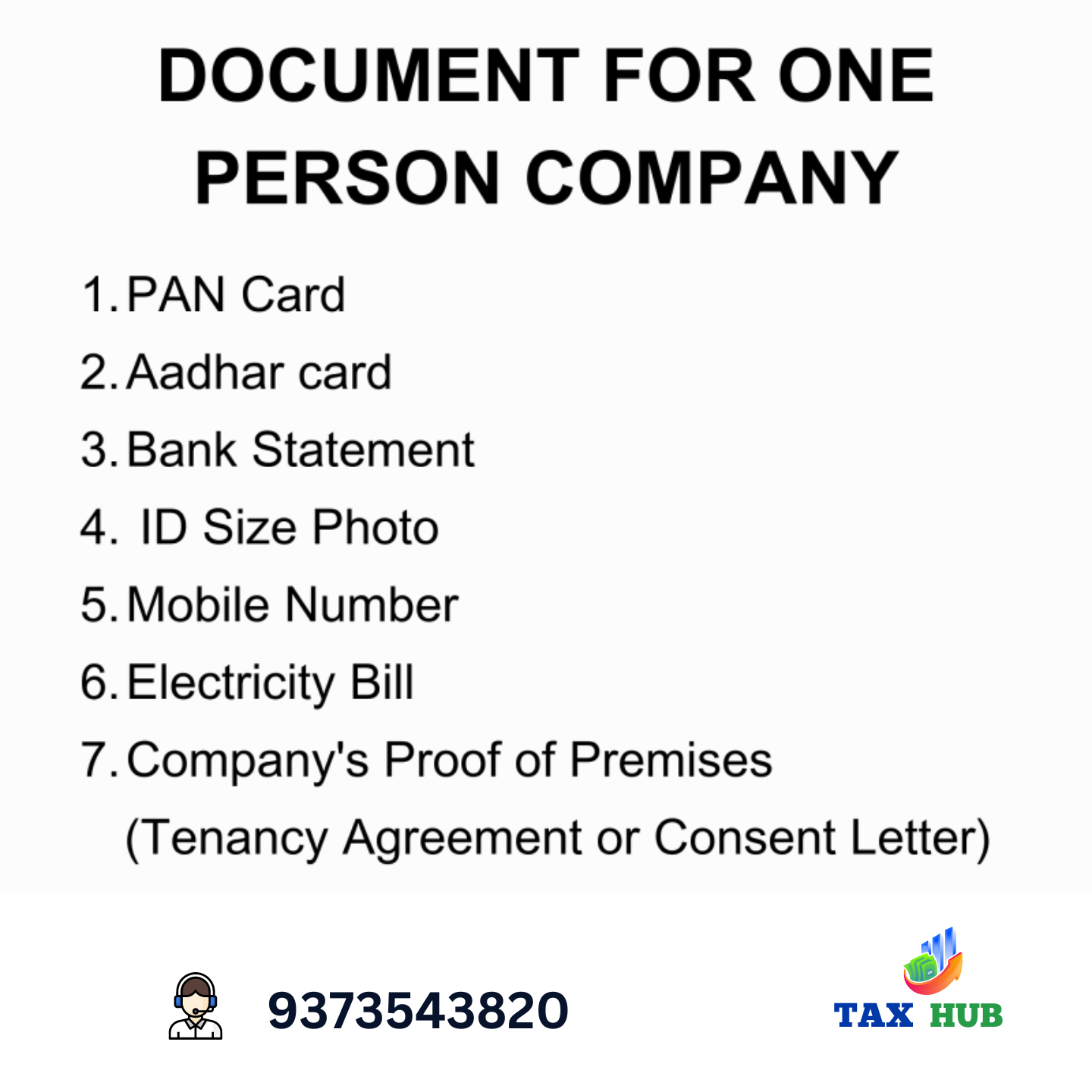
One Person Company The primary benefit of a One Person Company is that it allows for greater control and flexibility for the individual running the business. Unlike a partnership firm or a Limited Liability Partnership (LLP) firm, the sole shareholder has complete control over the company’s decision-making process. Another advantage of a One Person Company is that it requires fewer compliances than other business forms. The company is only required to file an annual return and has no other compliances such as audits or filing of balance sheets. This makes it very attractive for small businesses just starting and needing to focus on growth. Introduction to One Person Company (OPC) One Person Company (OPC) registration in India was introduced as a concept under the Companies Act of 2013, enabling a single individual to establish a company and enjoy the combined benefits of both a sole proprietorship and a traditional company structure. This concept became available with the implementation of the Companies Act in 2013. The primary objective behind creating one-person companies was to foster entrepreneurship and encourage the formalization of Micro, Small, and Medium Enterprises (MSMEs). According to Section 2(62) of the Companies Act 2013, a company can be formed with just one director and one member, and interestingly, these roles can be held by the same individual. Simply, OPC Company registration allows a single person to set up a limited liability company in India. The following describes the eligibility and procedure to register one person company. The taxation benefits are also desirable. One-Person Companies are treated as separate entities for taxation purposes, and the profits are taxed at a lower rate than those of a partnership firm or LLP. This makes a One Person Company a viable option for entrepreneurs who wish to save on their tax bills.
You May Also Like
Nidhi Company

Section 8 Company

One Person Company

Partnership registration

Proprietorship Registration

Private Limited Company

Praesent dapibus, neque id cursus ucibus, tortor neque egestas augue, eu vulputate magna eros eu erat. Aliquam erat volutpat. Nam dui mi, tincidunt quis, accumsan porttitor, facilisis luctus, metus.

